/
Nortec Collectivo - Latino USA Episode 433
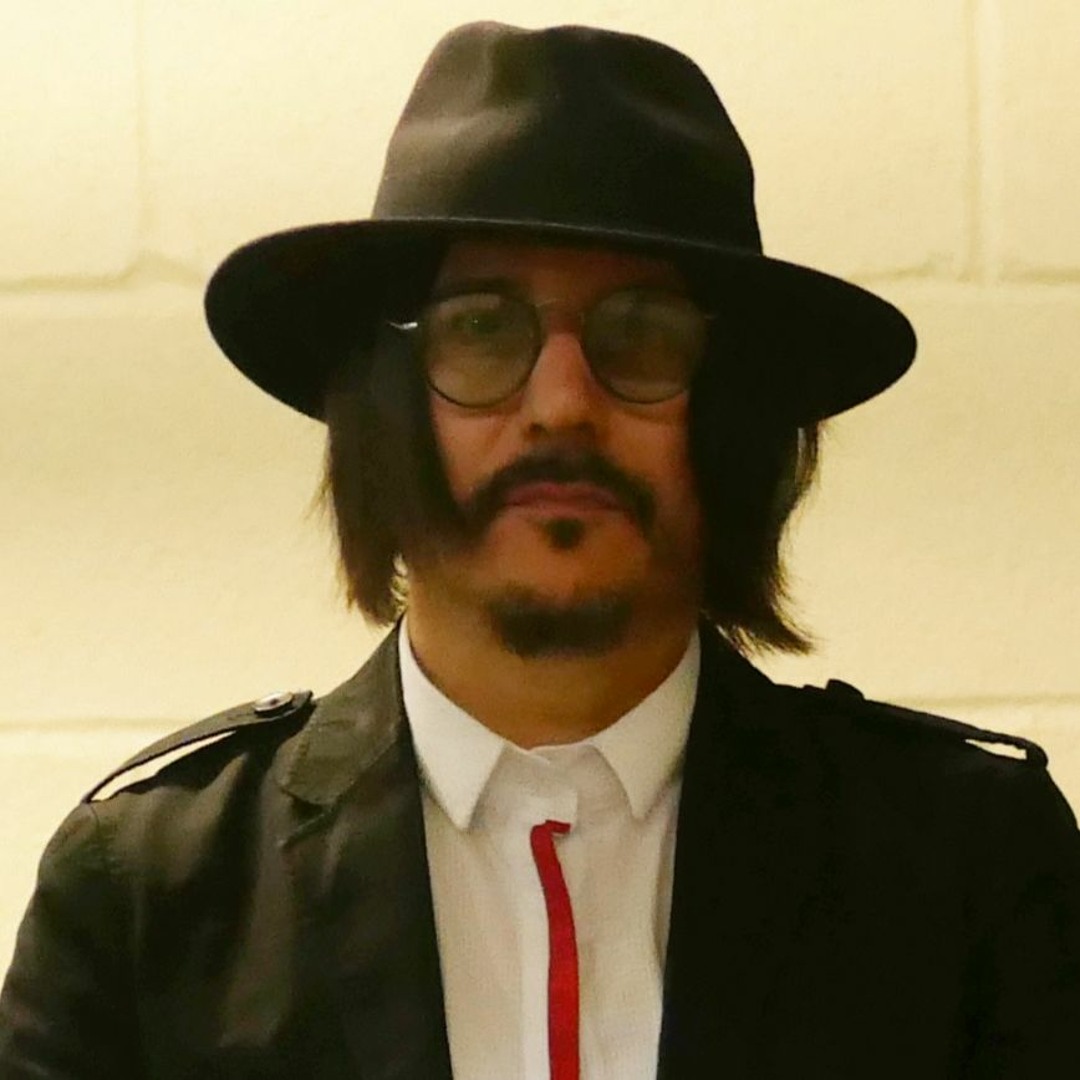
This segment was featured on Episode 433 and aired on July 27, 2001. It is a conversation between Maria Hinojosa and Pepe Mogt of Nortec Collective.
Nortec Collectivo
The musical genre came about in Tijuana, Mexico, in the 1990s. Nortec Collective was comprised of producers, DJs, and visual artists who blended the region’s Norteño and tambora traditions with electronica. This fusion is also reflected in the collective’s name, a combination of the words “Norteño” and “techno.” Pepe Mogt, from Tijuana, Mexico, is one of the movement’s founders and goes by the moniker, Fussible. Mogt began making electronic music in the 1980s, when he began experimenting with different genres of music. Mogt said in an interview that he wasn’t particularly fond of Norteño music growing up, and instead found passion in electronic music, which went on to become an influence on Nortec. He began collecting tapes of Norteño music and sounds and performing at nightclubs in Tijuana.
Their music combines horn and accordion with synths and bass. According to Americas Quarterly, Nortec Collective has released more than 6 albums and compilations between 1998 and 2014. Their 2005 album, Tijuana Sessions Volume 3 was nominated for two Latin Grammy Awards, including Best Alternative Album. Some of Nortec Collective’s founding members have since left the group; however, Nortec’s latest album was released in 2022, called De Sur a Norte.

Additional Resources
Articles
Madrid, Alejandro L. “Music and Performance in the Nortec Collective’s Border Aesthetics.” Review (Americas Society), vol. 42, no. 1, 910426270, 2009, https://doi.org/10.1080/08905760902816188.
Books
Madrid-Gonzalez, Alejandro L. Nor-Tec Rifa! Electronic Dance Music from Tijuana to the World / Alejandro Madrid. 1st ed., Oxford University Press, 2008.
Valenzuela Arce, José Manuel, and Déborah Holtz. Paso Del Nortec : This Is Tijuana! / José Manuel Valenzuela ; Editorial Project = Proyecto Editorial, Déborah
Holtz ; Introduction = Introducción, Pacho ; Epilogue = Epílogo, Josh Kun ; Graphic Editor = Editor Gráfico, Fritz Torres. 1. ed., Trilce Ediciones, 2004.
Videos
Funari, Vicky, et al. Maquilapolis = City of factories / ITVS ; a CineMamás film ; produced and directed by Vicky Funari, Sergio De La Torre in collaboration with the women of Grupo Factor X, Colectivo Chilpancingo, Promotoras por los Derechos de las Mujeres ; co-producers, Darcy McKinnon, Annelise Wunderlich ; in association with the Independent Television Service. California Newsreel, 2006.
Works Cited:
Raygoza, Isabela. “Nortec: Bostich + Fussible Talk 25 Years of Their Groundbreaking Mix of Norteño and Electronic Music.” Billboard, 18 Apr. 2025, https://www.billboard.com/music/latin/nortec-bostich-fussible-25-years-norteno-electronic-music-1235949580/.
Zubieta, Sebastian. “Border Beat: Tijuana’s Homegrown Electronic Sound.” Americas Quarterly, 3 May 2017, https://www.americasquarterly.org/fulltextarticle/border-beat-tijuanas-homegrown-electronic-sound/.
Annotations
00:00 - 00:14
[Music] It's a musical hybrid.
Maria Hinojosa
Fusion
Music
00:14 - 00:33
Electrónica meets down-home Mexican music. [Music]
Maria Hinojosa
Electronic
Regional
Music
00:33 - 00:36
It's also Tijuana and the border.
Maria Hinojosa
Fusion
Tijuana
Border Region
00:36 - 00:42
Actually, it's its own world, a hybrid world where cultures clash and reinvent themselves.
Maria Hinojosa
Fusion
00:42 - 00:51
This is Tijuana. Come in.
Music
00:51 - 00:55
This musical fusion is called Nortec, Norteño and Techno.
Fusion
Nortec
Music
00:55 - 01:12
Bostitch, Fusible, Panoptica, Hyperboreal, Chlorophylla are some of the names of the DJ crews sampled in a release called Nortec Collection, the Tijuana Sessions Volume 1.
Maria Hinojosa
The Tijuana Sessions Volume 1
01:12 - 01:18
Nortec is not only music, but a collective. And with us today on Latino USA is one of its founders, Pepe Mogt.
Maria Hinojosa
Nortec
01:18 - 01:22
So how was Nortec created?
Maria Hinojosa
Nortec
01:22 - 01:24
Actually, it was like more like an accident.
Pepe Mogt
01:24 - 01:36
We were like making an experiment of using the traditional sounds of the border, which is the Norteño music, Tambora and all these original sounds. The sounds that you commonly hear on the border.
Pepe Mogt
Norteño
Tambora
Border Region
01:36 - 01:45
I went to local studios and grabbed some samples from people that used to play in bars in Tijuana and used to get jobs, you know, in restaurants and even on the streets.
Pepe Mogt
Tijuana
01:45 - 01:47
They record demos in cheap studios in Tijuana.
Pepe Mogt
Tijuana
01:47 - 01:54
So I went to these studios and record these samples from unknown musicians, you know, playing well-known popular music.
Pepe Mogt
01:54 - 01:59
Then I come back to my studio and then I started experimenting with this track. And then I like the result of that.
Pepe Mogt
Fusion
01:59 - 02:03
Then I was thinking, you know, probably we can make a compilation of this.
Pepe Mogt
02:03 - 02:07
You know, I'm going to call all my friends that I have that they are doing electronic music.
Pepe Mogt
Electronic
02:07 - 02:14
So I invite them just to create a compilation that doesn't have any name and nothing. It's just, you know, fusion these sounds.
Pepe Mogt
Fusion
02:14 - 02:19
So then like a month later, they have like not only one track, they have like two, three tracks. [Music]
Pepe Mogt
02:29 - 03:04
You guys say that the Electronica comes from an inspiration, from a long way back like Kraftwerk and like the original techno-technos.
Maria Hinojosa
Electronic
Kraftwerk
Techno
03:04 - 03:09
Yeah, the thing is like we live on the border and San Diego is next to Tijuana.
Pepe Mogt
San Diego
Tijuana
03:09 - 03:24
So there was a radio station and some DJs and some programs, for example, a program called Listen to This and we grew up influenced by those special programs on the night and they put electronic music. So we grew up mostly with that. [Music]
Pepe Mogt
Listen to This
Electronic
03:30 - 03:44
Now, for you, you say that it's much more than music. It's really an attitude, an atmosphere. What are you talking about?
Maria Hinojosa
03:44 - 03:57
Yeah, people is like when we put in the music, people were in Tijuana, they start recognizing the sounds, you know, the sounds of the border, the sound of the stuba, the sounds they hear on taxis, but now they're hearing on clubs with electronics.
Pepe Mogt
Tijuana
Border Region
03:57 - 04:11
So then people that were in other disciplines like graphic designers, painters, and then they say, you know, 'I'm working with the image from the border, an image from Tijuana, and I fusioned this in my works. Can I use your music?' Yeah, of course.
Pepe Mogt
Graphic Design
Painting
Border Region
Tijuana
Fusion
04:11 - 04:53
And then the word spreading out too fast because when the name came out of the compilation, the people start calling us the Nortec Collective or Collectivo Nortec, the Nortec guys, and then even clubs that invite us to play, they say, 'are you going to play your techno stuff or you're going to play Nortec?' You know, like they say, like if it is, you know, some kind of style or whatever. [Laughter] [Music]
Pepe Mogt
Nortec Collective
Collectivo Nortec
Techno
Fusion
Nortec
04:53 - 05:04
Where do you see Nortec going next? I mean, if it's a movement, if it's a multidisciplinary atmosphere and attitude, what comes next then in terms of where Nortec goes?
Maria Hinojosa
Fusion
Nortec
05:04 - 05:08
I don't know. I mean, it's like there is too much to do. I mean, there is too much to experiment.
Pepe Mogt
05:08 - 05:23
And even like what we were doing today, like with these people now as Nortec, with fusion, it's happened before with Santana, you know, Santana, which he was mixing the music of their age, you know, of the seventies with all the Mexican stuff that were there, you know.
Pepe Mogt
Santana
Fusion
Nortec
The 1970s
05:23 - 05:31
And earlier than Santana was, you know, like Herb Alpert, you know, fusioning the jazz, the American jazz with all the sounds happening in that moment in Tijuana.
Pepe Mogt
Fusion
Jazz
Tijuana
Herb Alpert
05:31 - 05:37
So I think it's always Tijuana has this vibe, you know, the border, the fusion of two cultures, the sounds that are flying around the radio waves and all these television channels, you know, back and forth from the border.
Pepe Mogt
Tijuana
Border Region
Fusion
05:44 - 05:50
It's something that inspire people and people like us, you know, living in Tijuana, inspired by both sides, you know.
Pepe Mogt
Tijuana
Border Region
05:50 - 05:54
It's like kind of a, that's a way to broke the border, you know.
Pepe Mogt
Border Region
Fusion
05:54 - 05:56
Well, good luck with everything.
Maria Hinojosa
05:56 - 06:07
We've been speaking with Pepe Mogt, who is part of the Nortec Collective, a CD with the Nortec compilation called The Tijuana Sessions Volume 1 is out on the Palm Pictures record label. [Music]
Maria Hinojosa
Nortec Collective
The Tijuana Sessions Volume 1